The Divided Line: Caleb [Part 1]

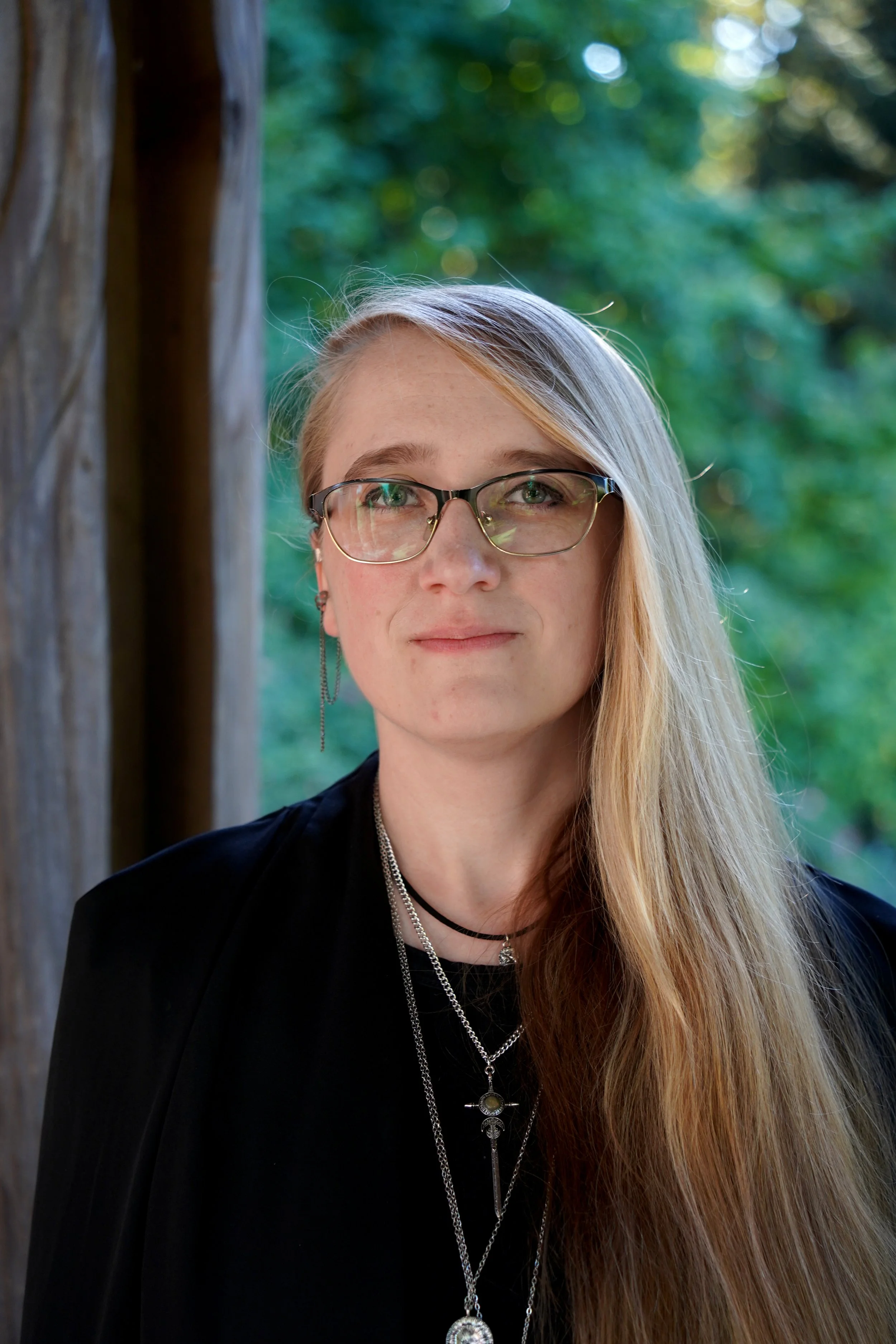
SLR camera poised to shoot an image
Umut Sarialan via Pexels
It began slowly—the plague, the greed, the riots. Revolutionaries rose up behind symbols, murals, and songs, while the masses were fed machinery and religion. In the wake of the destruction, politicians deemed art a dangerous thing—a worthless thing—and the masses agreed. They took away the paint, the books, and the instruments. But they could not wholly silence the artists. These are the stories they left behind.
Caleb woke to the soft trace of Serena’s fingers against his spine, her touch a slow resurrection from the depths of his dreams. He shifted, sheets whispering over his skin, and without thought, he wrapped his arms around her and pulled her close, her warmth an anchor which dragged his soul bodily back down into the blissful oblivion of sleep.
Serena pressed her lips to Caleb’s temple and whispered something in his ear, but whatever meaning her words had were lost to his exhaustion.
“Caleb,” she said again, and the corner of his lips tugged into a smile, the sound of his name from her tongue like a drug in the quiet predawn hour. “Caleb, wake up.”
He opened his eyes blearily and blinked, let the world come into focus. He wished suddenly, and not for the first time, that his eyes alone could take a photograph.
Serena leaned over him, blanket pooling at her hips, skin bared and tinted blue in the twilight. Caleb reached up and touched her face, brushed his thumb across her lips. “What is it?” he asked.
“Can’t you hear it?”
Caleb sat up, listened. And there it was. A faint murmur of voices outside. A chanting of sorts.
It carried an energy, one not unlike the mania which had overtaken the city the night of the burnings.
Fear sank its teeth into Caleb’s chest and sobered him suddenly from his weariness.
But it wasn’t a soldier’s cadence with which the people chanted. It wasn’t with malice or terror. Rather, it sounded like hope.
Caleb peered out through the crack in the curtained window above their bed. People gathered in the streets, brightly garbed and brandishing hand painted banners. The nearest bore a simple declaration in bold black lettering: “Let them go!”
Drums rolled from the brick alleyways and converged upon the square, each musician followed by a small mass of people. They carried things with them: Bits of furniture and fragments of wood. Dresser drawers and desk tops. One group hoisted a billboard overhead from one of the Upper City’s tech institutions.
He saw other things, too. Instrument cases and cable boxes, armfuls of elaborate costumes, buckets of paint, and more.
A knock sounded at the apartment door, soft and quick. Caleb clambered from the bed and pulled on his clothes, buttoning them swiftly before answering.
A boy stood on the other side.
“We’re holding a vigil for the vanished,” he said. “Bring something for the barricade.”
He didn’t wait for a response, simply scampered off to the next door and rapped against it.
~~~~~~~
Other tenants of the building funneled with them down the dust-filled stairwell, pieces of small furniture in hand. Serena clung to a barstool of theirs which had been missing a bolt for years. It nearly toppled every time they tried to sit in it, and it was about time they retired it to a good cause.
As for Caleb, he carried a small collection of contraband. Wires, lenses, an old digital camera, a tablet built from scavenged parts by Serena (unsanctioned and untraceable), and a makeshift projector. He’d packed food alongside it. Small snacks and bottles of water. A spare roll of clothes and first aid supplies.
“This way!” shouted a woman at the exit. She held a great flag of vibrant cloth, motioning to a back entry point of the square. Furniture stood interlocked in a great mound on the main road, the post of the billboard protruding outward from it like a javelin, the flag of a fallen nation draped torn and tattered overtop it.
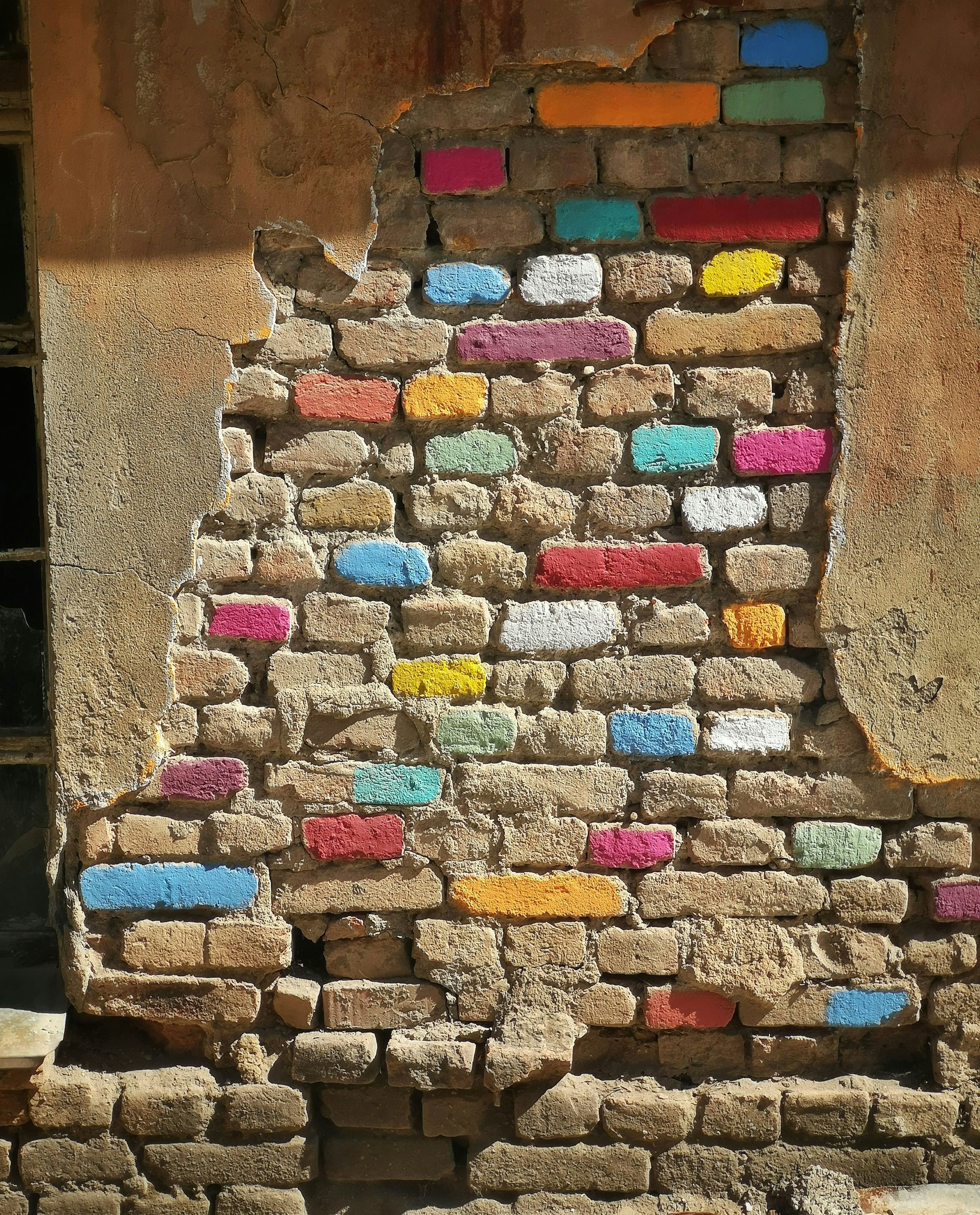
Painted bricks amid an exposed wall
Alex Slav via Unsplash
“Put your donations here!” said a man who took the barstool from Serena’s hands and placed it in a pile to be added to the fortification.
Inside the bounds of the square, the crowd dispersed. Serena pulled Caleb to the left. There, people gathered around paint buckets and took to the walls. Some mapped out murals while others followed the whims of some muse, painting obscure shapes, warped figures, and splattering clashing colors upon the moss-polluted brick.
In the center of them all, a boy stood armed with a spray can and a respirator. With sharp streaks, he painted a symbol Caleb had seen on the side of the city train one morning. He’d seen it only a few times since—had once heard someone name it the mark of the visionaries.
Caleb withdrew his camera, pocketed the lens cap, and flipped it on. He took careful aim, adjusted the focus, then snapped a photo of the boy with his paint spattered hands, the symbol blood-red behind him.
The Divided Line is an original serial.