
Evergreen Style: Seattle Fat Mall
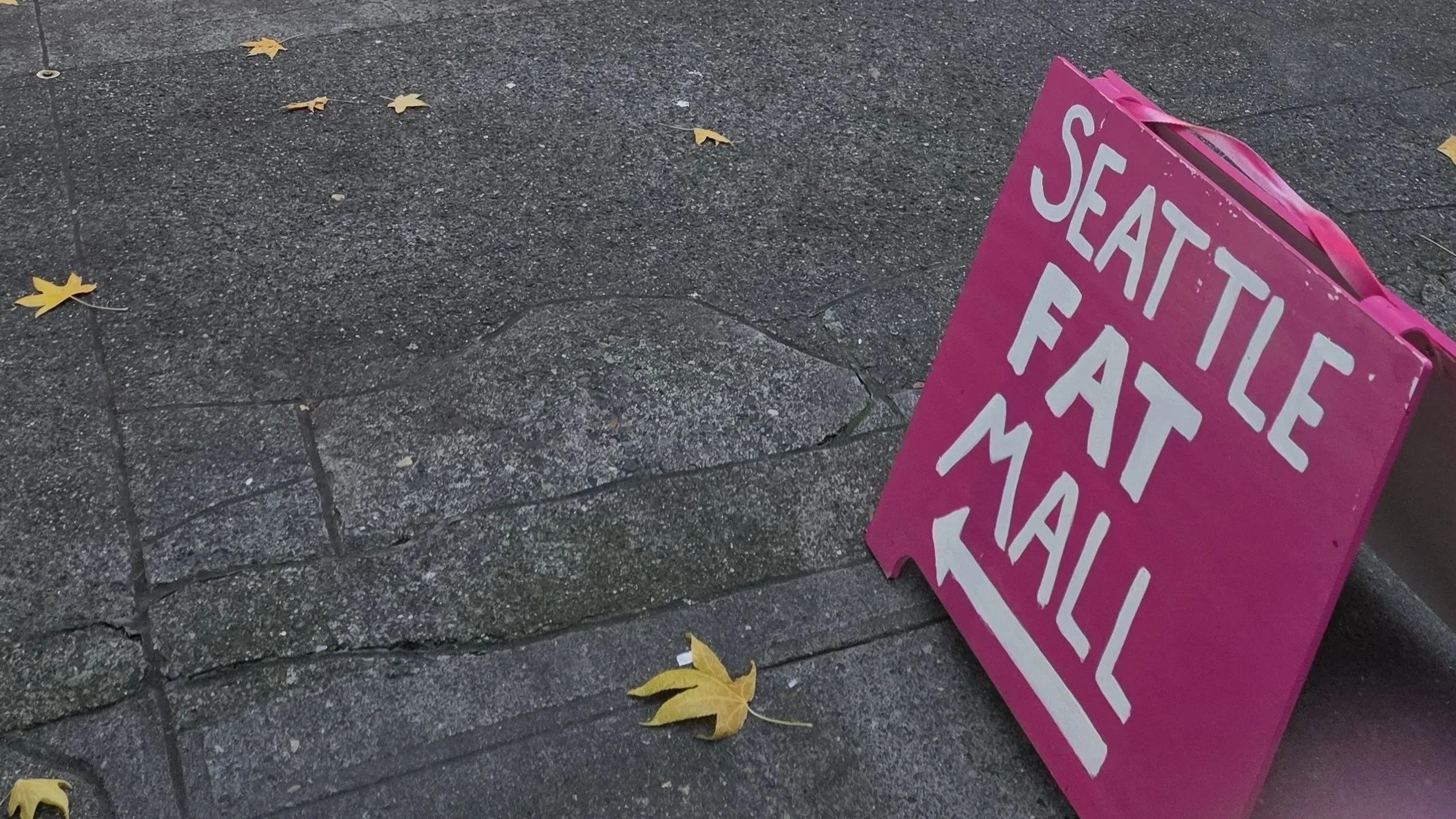
Sign pointing to Seattle Fat Mall on a cloudy Seattle day
The Evergreen Echo
One of the greatest joys about fashion is finding the perfect fit. Yet for fat or plus-size shoppers, that joy is rare, often overshadowed by an exhausting search for options that barely exist.
Earlier this year, in partnership with Seattle Restored, the Seattle Fall Mall emerged as a pop-up community space in Downtown Seattle where being fat or plus-size was centered and celebrated.
For eight months, the founders—Amber and Alyss Seelig, Candace Frank, and Kwame Phillips-Solomon—brought together local artists and fashion designers who challenge industry norms through body positivity and collective liberation.
In a series of conversations with some of the founders on the closing day, it was clear that the mall was more than just a shopping center. It was also a reimagining of what fashion can look like when all bodies are honored and included.
Note: Interviews have been combined and edited for brevity.
JeLisa: Can you tell me a little bit about yourself and your relationship with fashion in Seattle?
Candace: I have a brand called Chub Rub Clothing. We make clothing, art, gifts, [and] all kinds of stuff that is specifically about taking up visual space and normalizing different beauty standards, especially different body shapes…I started out as a costume designer. I have a master’s degree in costume design. I still design operas once in a while, but I kind of started to get frustrated about how you have to really wait for a director or something. You need to use somebody else’s creative impulse to create your thing. So, I started creating my own stuff, and then I just realized how healing [it is].
Amber: Well, [Alyss and I] both grew up here. We started to become involved in the fashion scene in 2021 when we launched Curvy Cactus. We started sourcing, selling, resale and then over the years developed our own line of upcycled and reworked items and really unique pieces.
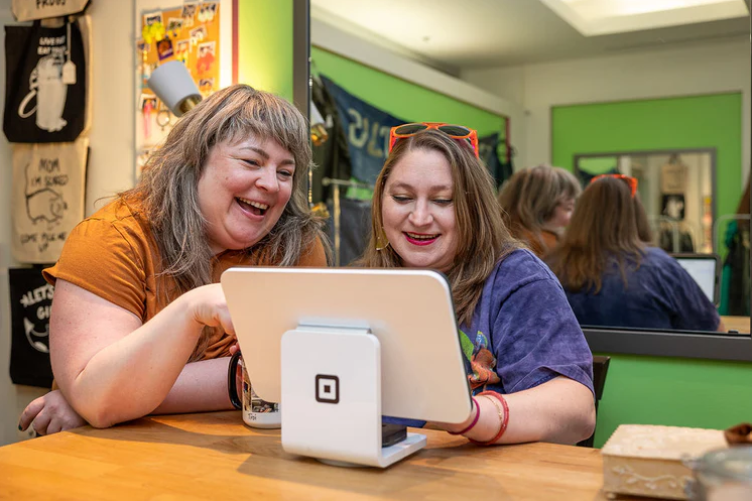
Amber Seelig and Alyss Seelig of Curvy Cactus
Courtesy of Seattle Fat Mall
JeLisa: How and why did you all find each other and decide to move forward with the idea of the Seattle Fat Mall?
Candace: So, Amber and Alyss, who run Curvy Cactus, were doing a live on the Fat Con Instagram [profile]. Fat Con is a three-day fat liberation conference. I’m one of the founders of it, and I saw the live, and [wondered] how I did not know about them. Right away, my thinking is like, the more of this we have in town, the more people want it. You know? The tide rises all boats.
Amber: We met Candace through Fat Con and and then had this idea to do the Fat Mall. It was [initially] just a call out on Instagram [to] search for vendors. We have had over 50 people apply now over the eight months, [but] I think we’ve probably had 25 or so vendors.
Alyss: We have vendors that are like residents that are here every time that that mall is open. They have a permanent space. And then we have pop-up vendors that rotate. We can have a bunch of different stuff every time somebody comes in.
JeLisa: Now that people have been coming in and engaging with what you’re doing, how has the idea evolved, or what has it come to represent to you?
Candace: Yeah, that’s a good question. I do think it’s gone beyond what I expected, for sure. I mean, just being able to, like, really flesh out separate shops and all these little spaces has been really amazing, and also watching some of these newer businesses build while they’ve been here is also one of those things that has gone way beyond what I thought was possible. Yeah, and we’ve gotten tons of national press. Forbes interviewed us. We were on NPR a couple of times…I think people really like the idea of a space where it’s not just the clothes that are for you, it’s like the whole space is for you.
JeLisa: Yeah. Congrats! I love that there are so many dope people in this city.
Candace: Thank you! Seriously. Either here or Portland, I think [those are] the only two places this could happen, for sure.
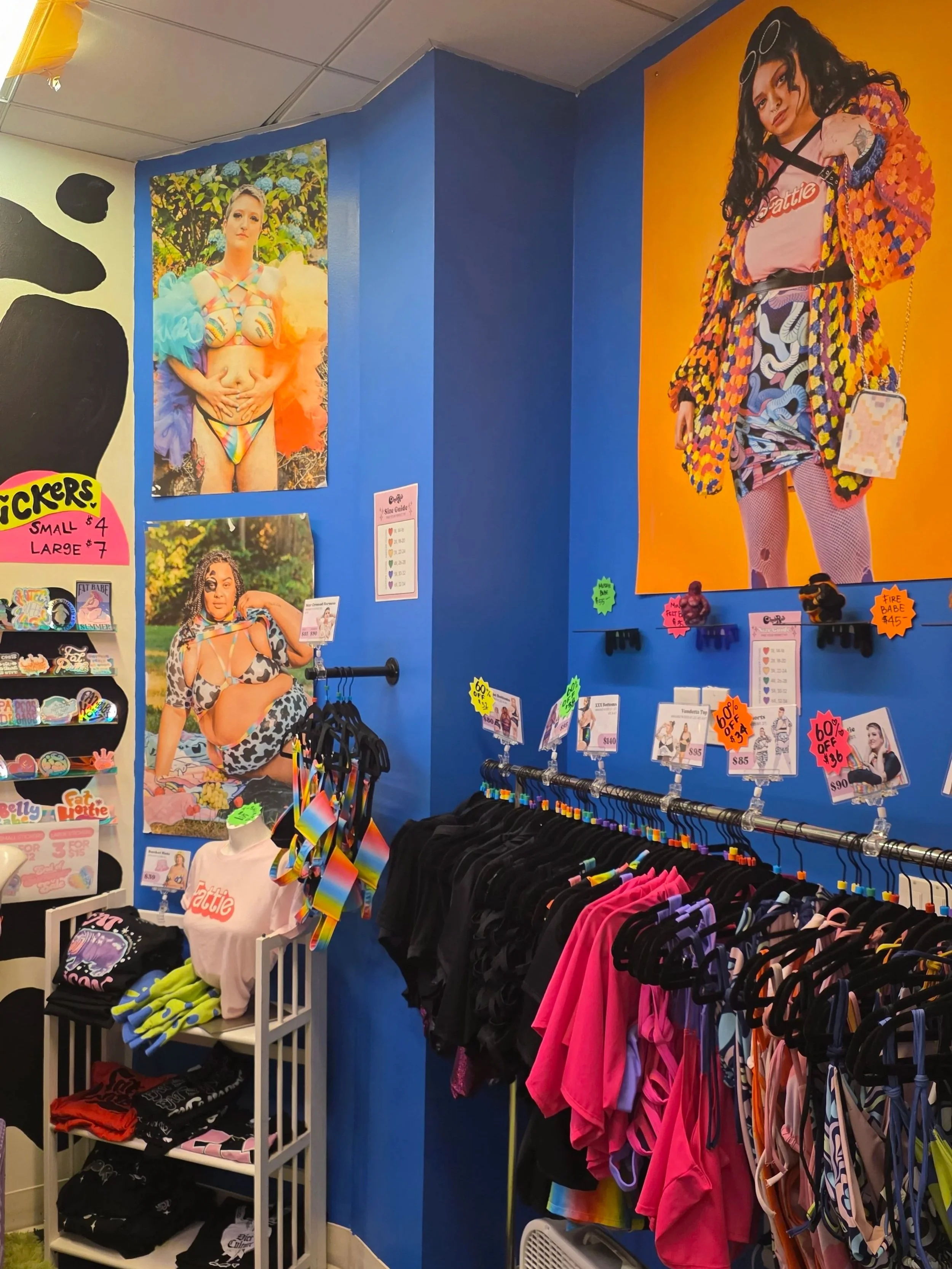
Retail spot for Chub Rub Clothing at the Fat Mall
The Evergreen Echo
JeLisa: What’s next?
Candace: Yeah. For me, and some of the other designers here, we’re hosting a fashion show called Salvage [November 28th]. And then, for the mall itself, we have a Holiday Market [November 29th]. That’s literally the last day in here. It won’t be like this anymore…And then in February, right now, we have a market coming as well—a Valentine’s Day Market— February 8 in Pioneer Square.
Amber: We’re actively looking for a brick-and-mortar [for Curvy Cactus] right now. The Fat Mall is going to become a pop-up market. We’ll do several events a year. We’ll have the whole gang, hopefully, and more vendors back together. So, yeah, it’s gonna change, but it’s not going away.
Although the Seattle Fat Mall has closed its doors, what remains is a powerful reminder of what fashion can become when fat or plus-size bodies are at the forefront of the shopping experience.
The pop-up created a space where joy is prioritized, proving that body positivity and inclusivity is necessary and possible. One of the featured designers, Hayden Grice, summed it up perfectly:
“This space has been one of the biggest opportunities to have my art in a storefront. I don’t think I have ever seen one of my pieces on a mannequin…in Seattle with people who look like me and ask for my pronouns. Everyone is so supportive of everyone else’s art. I will miss the sense of community.”
