
Life on the Moon Powerfully Illuminates Familial, Autistic Expression
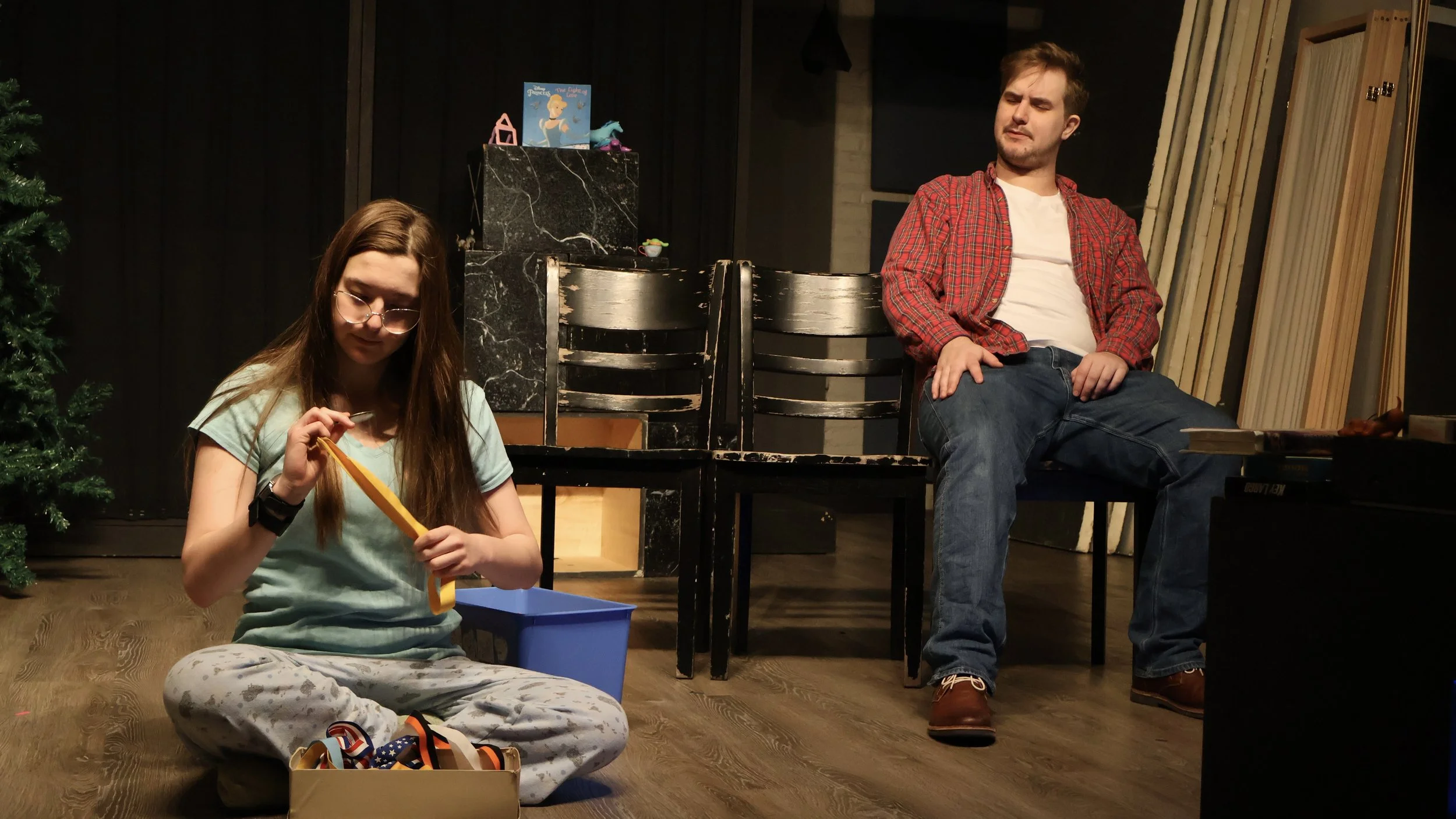
Piper (Genevieve Gay) and Spencer (Adam Nyhoff) in Life on the Moon
Cat Brooks / Courtesy of Baker Theater Workshop
As the year enters its final weeks, and the darkness, rain, and solstice surround us in the Pacific Northwest, the holidays can feel bleak. What little light we can find, we must cling to. I tend to turn to art this time of year to keep the encroaching ennui at bay. It can provide inspiration, escapism, and laughter. It keeps me remembering the important things.
On December 14, I was lucky enough to attend the PNW premiere of Life on the Moon, a play written by Anna Tatelman, directed by Jeremy Radick, and produced by Baker Theater Workshop. Hosted at ReAct Theatre, Life on the Moon is a family drama that centers on the relationship between siblings Piper, an 18-year-old with autism, and her older brother Spencer, who has just returned home from the army for the holidays.
As the play began, the theater dimmed on a dark living room set, illuminated only by Christmas lights. Toys were laid out in lines and rows on the couch, VHS tapes of Christmas movies sat on the TV, and “In the Bleak Midwinter” played in the background. This inviting, cozy moment reminded me of coming downstairs in the middle of the night to look at my family Christmas tree; those moments of stillness and alone time were always important to me amidst the hectic routines of the holidays. These scene transitions were a recurring choice throughout the play—carols playing in the dark against the twinkling lights of the tree served as meditative moments for the audience between emotionally charged family interactions.
When the lights came up on the first scene, we were introduced immediately to the play’s four characters: Piper (played by Genevieve Gay), Spencer (Adam Nyhoff), and their parents, Helen (Elizabeth Dilley) and Bruce (Sean Vale). When the family sat down to dinner on Spencer’s first night home, it became clear that Piper’s family members had adapted their routines to be more accommodating to her needs. Bruce brought Piper a plate, and she stayed by the TV to eat, carrying on a monologue to herself, while the rest of her family sat at the table and had a totally separate conversation. While it was challenging as an audience member to listen to both conversations at once, Piper and her family appeared unphased and it seemed like a regular occurrence.
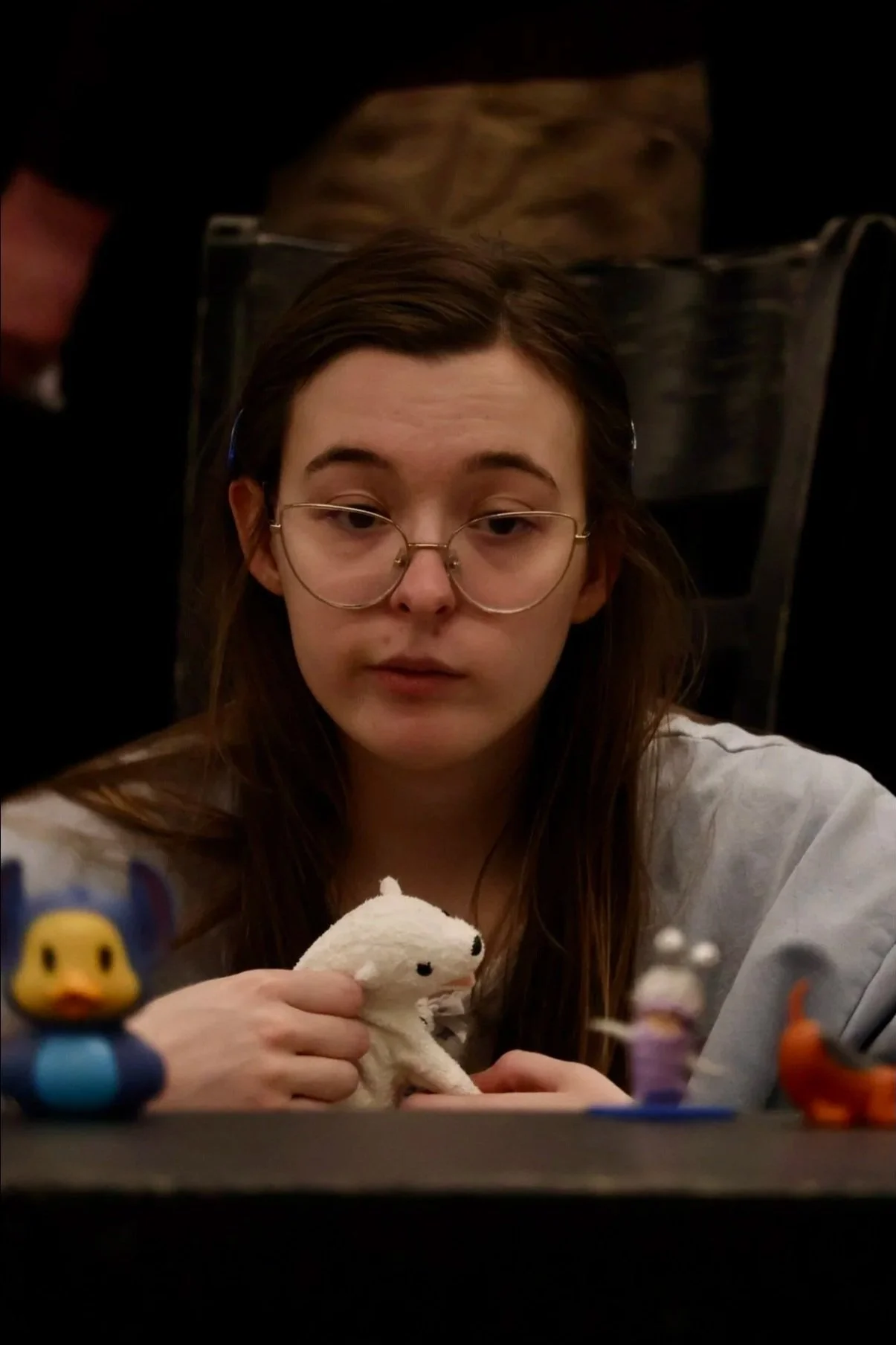
Piper (Genevieve Gay)
Cat Brooks / Courtesy of Baker Theater Workshop
It also became clear that Piper communicated in ways that initially might've seemed indirect or confusing to a neurotypical person. She addressed her family members as book and movie characters, she spoke in quotations, game rules, and historical facts, and often referred to herself as “you.” Spencer usually connected with her by asking if she wanted to hear a story, and then narrating what he perceived to be going on in that moment in a literary way, as this was a mode of communication that worked well for her.
Tatelman began workshopping Life on the Moon in 2013, and the play has gone through several iterations and productions since then. “I had been wanting for a while to write a story with a character with a disability where the disability was not the story and was also not the entire character,” Tatelman says. This production of the play is also the first time Piper has been played by an autistic actor, which Tatelman says has “definitely added something to the production…seeing how she approaches motivations slightly differently for the character.” Gay’s performance as Piper is phenomenal. The role requires a careful emotional balance between showing Piper’s highly attuned perception and her struggle in expressing what she picks up on. Gay carries this balance with great nuance that made me empathize deeply with Piper.
In Tatelman’s words, the play is “primarily about two people who fundamentally can’t communicate what’s wrong.” Through this specific story of four people, it examines the universally relatable experience of how hard it is to express directly how we feel, and how substitutions and subtext are often required to convey meaning. In Life on the Moon, Spencer and his mom Helen communicate primarily through discussing movies. This is their language of love connection, similar to how Piper and Spencer relate to each other through telling stories.
The play also deals with the isolation and anxiety that can occur when someone feels that they are not able to say what they really mean or that their meaning is lost on others. At one point, Spencer asks Helen to teach him how to best support Piper “before you’re gone or can’t communicate.” In another moment, Piper calls out her entire family by quoting a scene from Peter Pan, where she says, “But he never noticed, he had so much to say about himself.”
I felt tears in my eyes on numerous occasions throughout the play, not only thanks to the nuanced and heartfelt performances, but also the impeccable writing. Structurally, Life on the Moon is such a satisfying work of storytelling, which felt to me, just like A Farewell to Arms or It’s a Wonderful Life to Piper, like a movie I could rewatch and keep finding new things in. It’s a powerful piece of art.
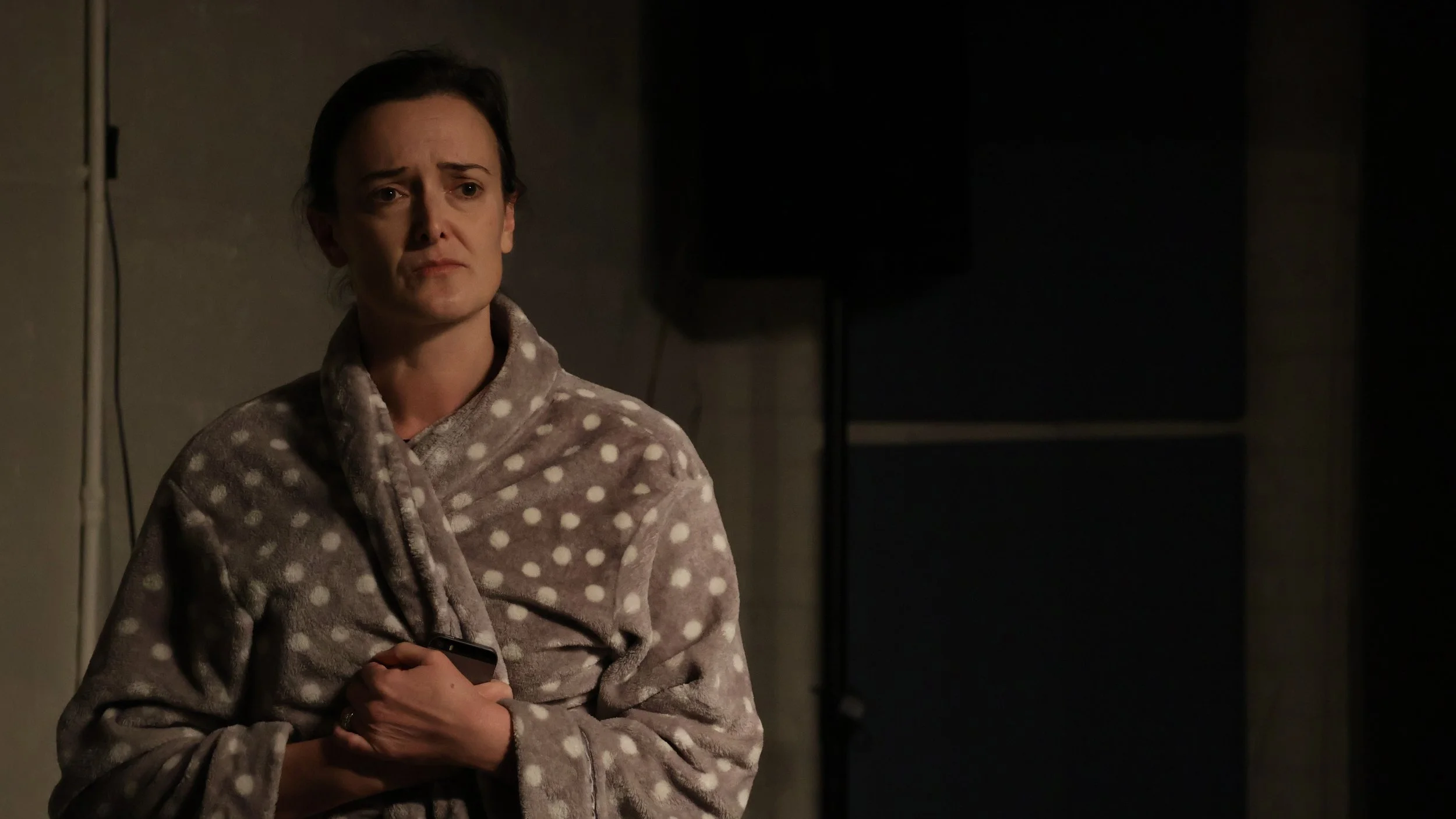
Helen (Elizabeth Dilley) in Life on the Moon
Cat Brooks / Courtesy of Baker Theater Workshop
